
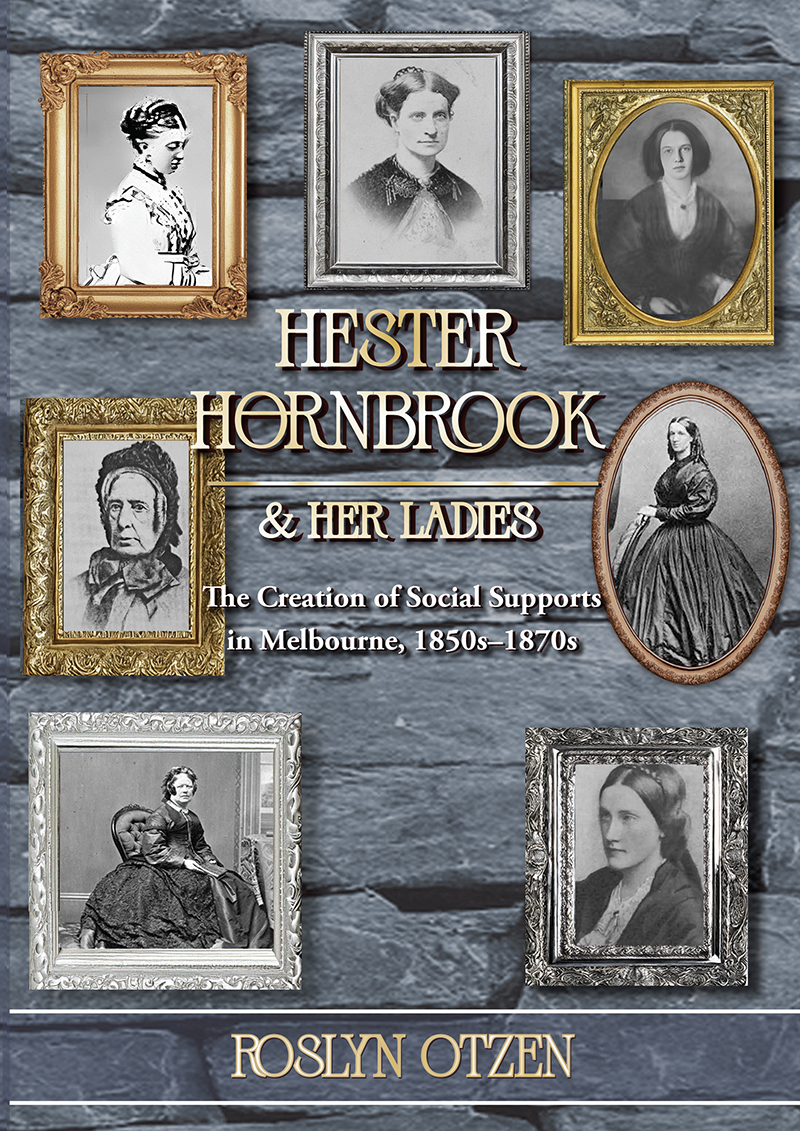
The tumultuous arrival of thousands of the gold seekers to the small settlement of Melbourne in the 1850s was a disaster for many. The ill, the aged, abandoned or widowed women and their children, the disabled – for all of these, there were no supports at all. The government was lacking the will or resources to assist, and it fell to fellow-settlers, mainly Christian women and men, to do what they could. Hester Hornbrook, a frail elderly widow living on a tiny army pension, took up the challenge. As a founder in 1854 and manager of the Melbourne City Mission (MCM), she created, funded and organised an entire system of schools for poor children. She gathered around her an extraordinary group of women of like-mind, many already engaged in several areas of social support for women and children, to run these schools. Eventually the government in 1872 legislated for free, universal, secular education, reducing the need for their schools, and they gradually closed.
Hester Hornbrook and the many women she worked with are completely unknown. Even historians have ignored them. This detailed study of their work brings them again vividly into focus. Their work in creating Melbourne’s first social supports saved thousands of people from lives and deaths in misery, and formed the basis of future social support systems in Victoria.
The MCM continues in the 21st century. Out of their work, a re-born Hornbrook school system has today been created and named for her. Its work in providing schools for students of today, struggling with great difficulties, is flourishing. The Hester Hornbrook Academy is a powerful and revolutionary leader in developing new approaches to schooling for disengaged young people.